
Stepping into the kitchen to create a plate of authentic Greek Moussaka feels like a culinary adventure through the sun-drenched shores of the Mediterranean. This layered delight brings together the best of golden-fried eggplant, tender potatoes, and savory ground meat, all hugged by a creamy béchamel that transforms it into pure comfort food. The beauty of this traditional Greek dish lies not only in its rich, heartwarming flavors but also in the joy of sharing it with loved ones. With easy prep steps, this recipe is perfect for cozy family dinners or gatherings. Are you ready to uncover the secret to this Greek classic that won’t just satisfy your cravings but also impress your guests?
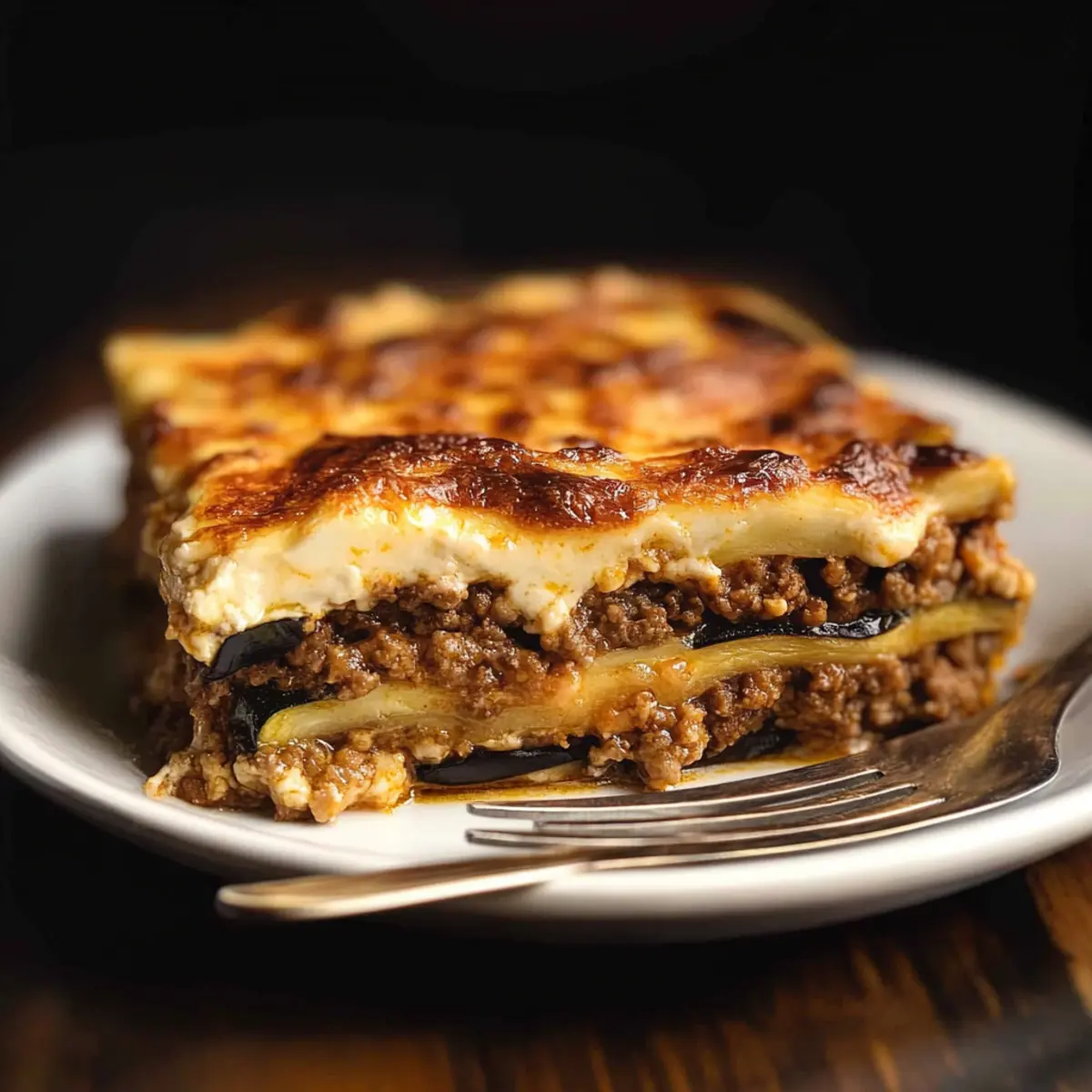
Why is Greek Moussaka a Must-Try?
Layers of Flavor: Experience an explosion of taste with each forkful, from rich meat sauce to creamy béchamel.
Easy Preparation: It’s simpler than you think—just follow the straightforward steps for a delicious result.
Crowd-Pleasing Dish: Perfect for family gatherings or impressing friends, Moussaka is sure to be a hit!
Versatile Options: Whether you’re craving a vegetarian twist or a hearty meat version, this classic dish is easily adaptable.
Nostalgic Comfort: Each bite takes you on a journey to Greece, making it ideal for a cozy dinner with loved ones. If you want more ways to enjoy cozy casseroles, check out our collection of comfort food recipes.
Greek Moussaka Ingredients
• Get ready to dive into delightful flavors!
For the Meat Sauce
- Ground Beef – Adds protein and a hearty flavor; substitute half with ground pork or lamb for depth.
- Onion – Enhances sweetness and aroma in the sauce; shallots can be a good substitute.
- Tomato Paste – Enriches the flavor of the sauce; swap for tomato purée if needed.
- Diced Tomatoes – Fresh or canned, they provide acidity; choose fresh when in season.
- Tomato Sauce – Serves as a base for the sauce; passata works well for a smoother texture.
- Spices (Nutmeg, Cloves, Allspice, Cinnamon) – Boosts flavor; adjust to your taste preference.
For the Vegetables
- Eggplants – Essential for texture; salt and drain them to reduce bitterness.
- Potatoes – Create a sturdy base layer; can substitute with more eggplants if preferred.
- Zucchini – Adds moisture; can omit or replace with additional eggplants if desired.
For the Béchamel Sauce
- Butter – A must-have for the béchamel; margarine can be used as an alternative.
- All-Purpose Flour – Thickens the sauce; whole wheat flour can be a healthier choice.
- Milk – Forms the creamy béchamel; whole milk yields a richer texture.
- Eggs – Provide richness and help set the béchamel; vegan egg substitutes may alter texture.
- Cheeses (Kasseri, Kefalotyri) – Enhance savory depth; Parmesan or Pecorino can substitute if necessary.
For Frying
- Vegetable Oil – Used for frying; olive oil adds a delightful flavor.
Embrace the warmth of cooking and create your very own Greek Moussaka—an experience that transforms simple ingredients into something truly special!
Step‑by‑Step Instructions for Authentic Greek Moussaka
Step 1: Prepare the Meat Sauce
In a large skillet, heat 2 tablespoons of olive oil over medium heat. Sauté 1 finely chopped onion until it’s soft and translucent, about 5 minutes. Add 500g of ground beef, breaking it apart with a spatula until browned, approximately 8–10 minutes. Stir in 2 tablespoons of tomato paste, 400g of diced tomatoes, and 200g of tomato sauce along with 1 teaspoon each of nutmeg, cloves, allspice, and cinnamon. Simmer for 20 minutes until the sauce thickens and becomes aromatic.
Step 2: Fry the Vegetables
While the meat sauce simmers, slice 2 eggplants and soak them in salted water for 30 minutes to draw out bitterness. After soaking, pat the eggplant slices dry. In a deep pan, heat vegetable oil over medium-high heat, and fry 2-3 sliced potatoes until golden brown, about 4-5 minutes, then set aside to drain on paper towels. Next, fry the eggplant and zucchini until tender and golden, about 3-4 minutes each, ensuring excess oil drains off as well.
Step 3: Make Béchamel Sauce
In a medium saucepan, melt 100g of butter over low heat. Once melted, whisk in 100g of all-purpose flour to create a roux, cooking for about 2 minutes until it turns golden. Gradually pour in 1 liter of warmed milk, whisking constantly to avoid lumps. Add 1/4 teaspoon of nutmeg and continue cooking until thickened, around 7-10 minutes. Off the heat, stir in 100g of grated cheese and 2 beaten eggs, mixing until creamy and smooth.
Step 4: Layering
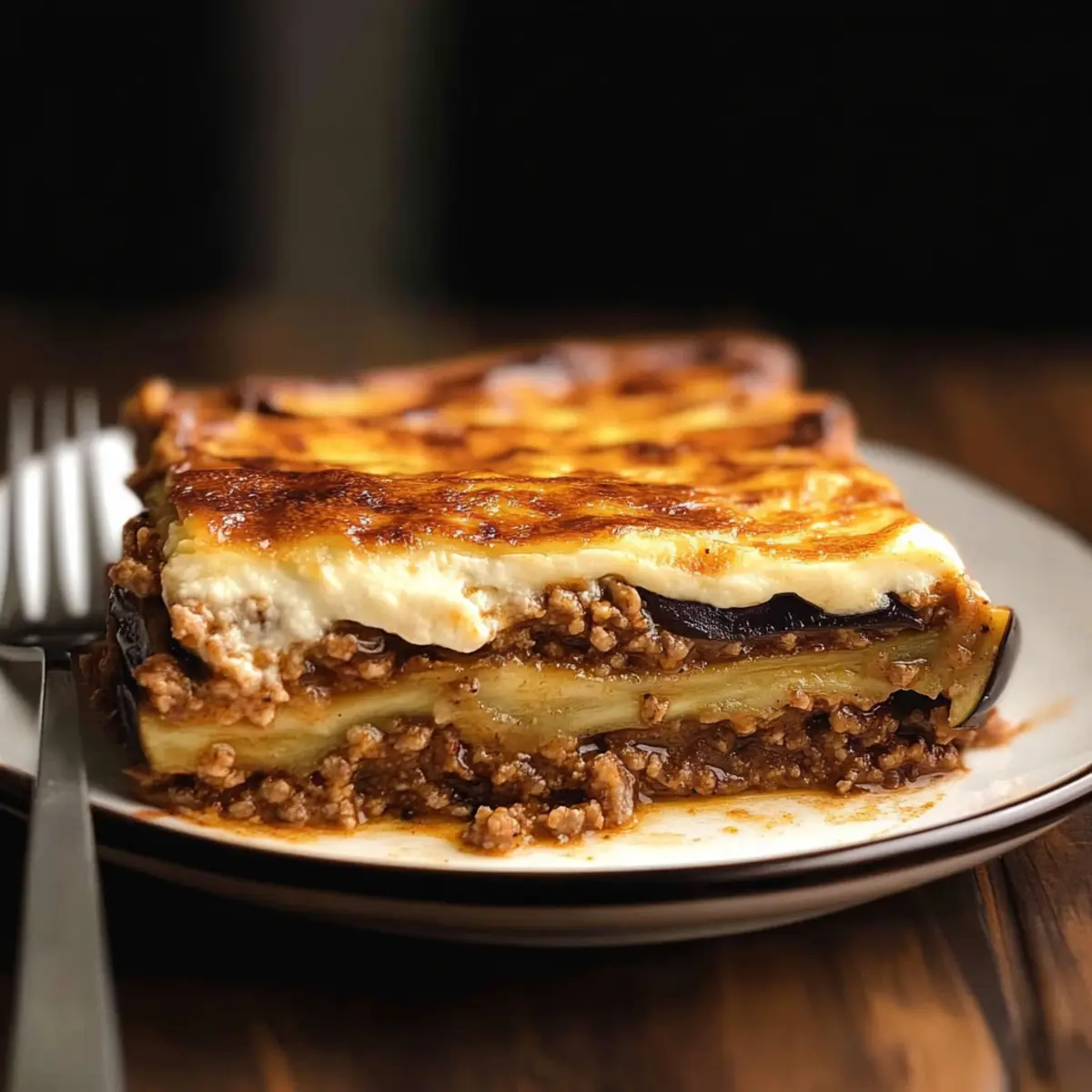
Preheat your oven to 200°C (390°F). In a greased 9×13 inch baking dish, start layering with half of the fried potatoes at the bottom. Follow with half of the fried eggplant and zucchini, then spread half of the meat sauce. Repeat these layers, finishing with the remaining fried vegetables topped with the béchamel sauce, spreading evenly to cover all layers completely.
Step 5: Bake
Sprinkle an additional layer of grated cheese over the béchamel. Place the baking dish in the preheated oven and bake for about 30 minutes or until the top is bubbling and golden brown. Once baked, remove the moussaka and let it cool for at least 30-60 minutes; this helps the layers to set, making it easier to slice and serve delicious portions of this hearty Greek moussaka.
Greek Moussaka Variations & Substitutions
Feel free to get creative with your Greek Moussaka—there are countless ways to put your own spin on this classic dish!
-
Vegetarian: Substitute ground meat with lentils or sautéed mushrooms for a hearty plant-based delight.
-
Dairy-Free: Use almond milk and vegan cheese to replace traditional dairy ingredients for a delicious vegan option.
-
Seasonal Veggies: Swap in fresh bell peppers or hearty squash for a twist using what’s in season.
-
Spicy Kick: Add red pepper flakes or cayenne pepper to the meat sauce for a spicy flavor boost that will warm you up.
-
Mediterranean Flair: Toss in olives or sun-dried tomatoes to the meat sauce for an extra layer of Mediterranean flavor that enhances richness.
-
Gluten-Free: Replace all-purpose flour in the béchamel with cornstarch or a gluten-free flour mix to maintain creaminess without the gluten.
-
Hearty Eggplant-Only version: For eggplant lovers, skip the potatoes and use extra layers of eggplant instead—great for a satisfying vegetarian meal!
-
Nutty Twist: Incorporate toasted pine nuts or walnuts into the meat filling for added texture and a nutty flavor that elevates the dish.
Each variation transforms the traditional Greek Moussaka into something uniquely yours! For extra inspiration, check out our favorite vegetarian recipes or explore ways to make this dish healthier with our collection of lightened-up comfort food. Enjoy the process of creating delicious memories!
How to Store and Freeze Greek Moussaka
Fridge: Store leftovers in an airtight container for up to 4 days. Allow the Moussaka to cool completely before refrigerating to maintain its texture.
Freezer: To freeze, cut the Moussaka into portions and wrap each piece tightly in plastic wrap, then place in a freezer-safe container. It can be frozen for up to 2 months.
Reheating: To reheat, thaw in the fridge overnight, then bake in a preheated oven at 180°C (350°F) for about 25-30 minutes until heated through.
Serving Tip: Enhance flavor by adding fresh herbs or a squeeze of lemon juice just before serving warm.
What to Serve with Authentic Greek Moussaka?
Moussaka isn’t just a meal; it’s an experience that deserves a delightful ensemble of sides to elevate its Mediterranean charm.
-
Greek Salad: A refreshing mix of cucumbers, tomatoes, and feta, this salad balances the richness of Moussaka perfectly.
-
Tzatziki Sauce: Cool and creamy tzatziki made with yogurt and cucumber adds a zesty note that complements the savory layers of Moussaka.
-
Pita Bread: Soft, warm pita serves as the ideal scoop for your Moussaka, letting you indulge in every bit of goodness on your plate.
-
Roasted Vegetables: Roasting seasonal veggies brings out their natural sweetness, providing a contrast to the heartiness of the Moussaka.
-
Olive Tapenade: This briny olive spread amplifies Mediterranean flavors and pairs wonderfully as a spread on warm bread alongside your meal.
-
Red Wine: A glass of dry red wine, like a rich Agiorgitiko or Chianti, enhances the savory flavors while adding a touch of elegance to your dining experience.
Bringing these elements together truly transforms your Moussaka dinner into a lavish feast that whispers tales of Greece with every bite!
Make Ahead Options
These Greek Moussaka are perfect for busy weeknights or meal prep enthusiasts! You can prepare the meat sauce and béchamel sauce up to 24 hours in advance, refrigerating them separately to maintain freshness. Simply make the meat sauce, allow it to cool, and store it in an airtight container. The same goes for the béchamel; store it covered to prevent a skin from forming. You can also fry the vegetables ahead of time, letting them cool before placing them in the fridge for about 3 days. When you’re ready to serve, layer the ingredients as directed, bake in a preheated oven, and enjoy delicious, hearty Greek Moussaka with minimal effort!
Expert Tips for Greek Moussaka
- Soak Eggplants: Always salt and soak eggplants for at least 30 minutes before frying to draw out bitterness, ensuring a better flavor in your Greek Moussaka.
- Whisk Constantly: When making béchamel, whisk continuously to avoid lumps and achieve a silky texture; this step is critical for creamy perfection.
- Layer Carefully: For even baking, carefully layer your ingredients from potatoes to béchamel; this prevents sogginess and ensures each slice holds together beautifully.
- Let It Rest: After baking, allow your Moussaka to cool for 30-60 minutes before serving; this helps the layers set and makes for tidy slices.
- Adjust Spices: Feel free to tweak the spices in the meat sauce based on your taste—experimenting with nutmeg or cinnamon can add delightful richness!
Greek Moussaka Recipe FAQs
How do I choose the right eggplants for Moussaka?
Absolutely! When selecting eggplants, look for ones that are firm and shiny with no dark spots all over. The skin should be smooth and vibrant in color. Avoid eggplants with wrinkles or soft spots, as they might be overripe. If possible, choose smaller varieties, as they tend to be less bitter.
How do I store leftover Greek Moussaka?
You can store leftovers beautifully! Just place the Moussaka in an airtight container and refrigerate it. It will stay fresh for up to 4 days. To maintain the best texture, make sure it cools completely before storing it in the fridge.
Can I freeze Greek Moussaka?
Certainly! Freezing Moussaka is a great option for meal prep. Cut it into individual portions and wrap each tightly in plastic wrap. Then place them in a freezer-safe container. It can be safely frozen for up to 2 months. When you’re ready to enjoy it, thaw in the fridge overnight and reheat in a preheated oven at 180°C (350°F) for about 25-30 minutes until warm and bubbly.
What can I do if my béchamel sauce is lumpy?
Very! If you find your béchamel sauce has lumps, don’t despair! Try this: Remove it from the heat and whisk vigorously to break up the lumps. If it’s still lumpy, you can use an immersion blender to blend it smooth. If needed, add a few drops of milk to help achieve that creamy texture you’re after. It’s all about patience and technique!
Are there any dietary considerations I should keep in mind for Moussaka?
Absolutely! If you’re making Moussaka for someone with dietary restrictions, consider these tips: For a gluten-free option, use cornstarch instead of flour for the béchamel. To make it dairy-free, choose plant-based milk and omit the cheese, or use vegan alternatives. If you’re catering to vegetarian diets, replace the ground beef with lentils or mushrooms for a protein-packed, hearty filling. Always remember to inform guests of any allergens present in your dish!
How long do I need to let Moussaka cool before serving?
Oh, the joy of patience! Allow your Moussaka to cool for at least 30-60 minutes after baking. This resting period is crucial, as it helps the layers set and makes it easier to slice into perfect portions, ensuring that your guests enjoy every delightful bite!
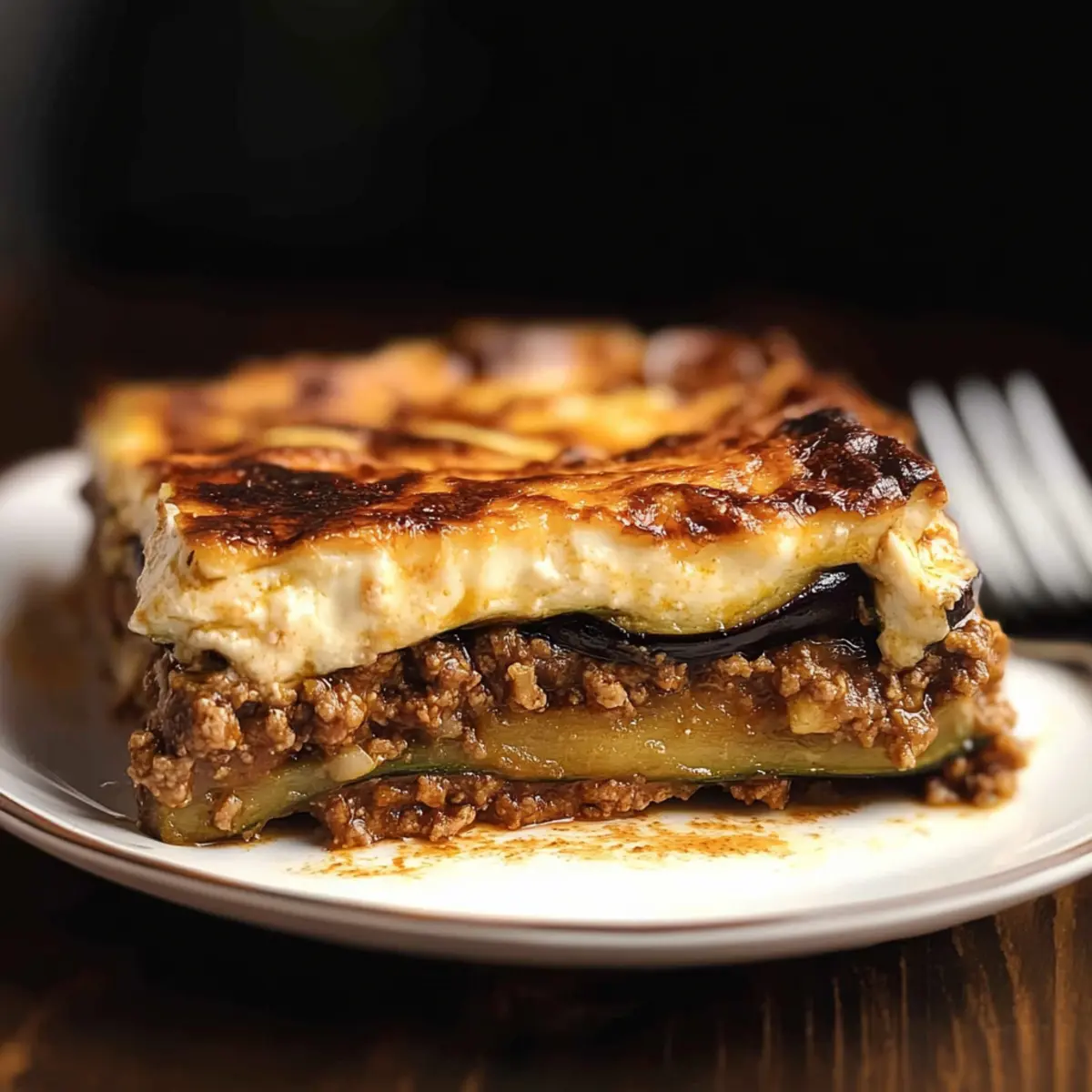
Hearty Greek Moussaka: Layers of Love and Flavor
Ingredients
Equipment
Method
- Heat 2 tablespoons of olive oil over medium heat in a large skillet. Sauté 1 finely chopped onion until soft and translucent, about 5 minutes. Add 500g of ground beef, breaking it apart until browned, approximately 8–10 minutes. Stir in 2 tablespoons of tomato paste, 400g of diced tomatoes, and 200g of tomato sauce along with spices. Simmer for 20 minutes.
- Slice 2 eggplants and soak in salted water for 30 minutes. Pat dry. Heat vegetable oil in a deep pan over medium-high heat, fry sliced potatoes until golden brown, about 4-5 minutes. Set aside. Fry eggplants and zucchini until tender and golden, about 3-4 minutes each.
- In a medium saucepan, melt 100g of butter over low heat. Whisk in 100g of all-purpose flour, cooking for about 2 minutes. Gradually pour in 1 liter of warmed milk, whisking constantly. Add nutmeg and cook until thickened.
- Preheat the oven to 200°C (390°F). In a greased baking dish, layer half of the fried potatoes, half of the fried eggplant and zucchini, then half of the meat sauce. Repeat layers with the remaining vegetables and top with béchamel sauce.
- Sprinkle additional grated cheese over the béchamel. Bake for about 30 minutes until bubbling and golden brown. Let cool for 30-60 minutes before slicing.
Leave a Reply