
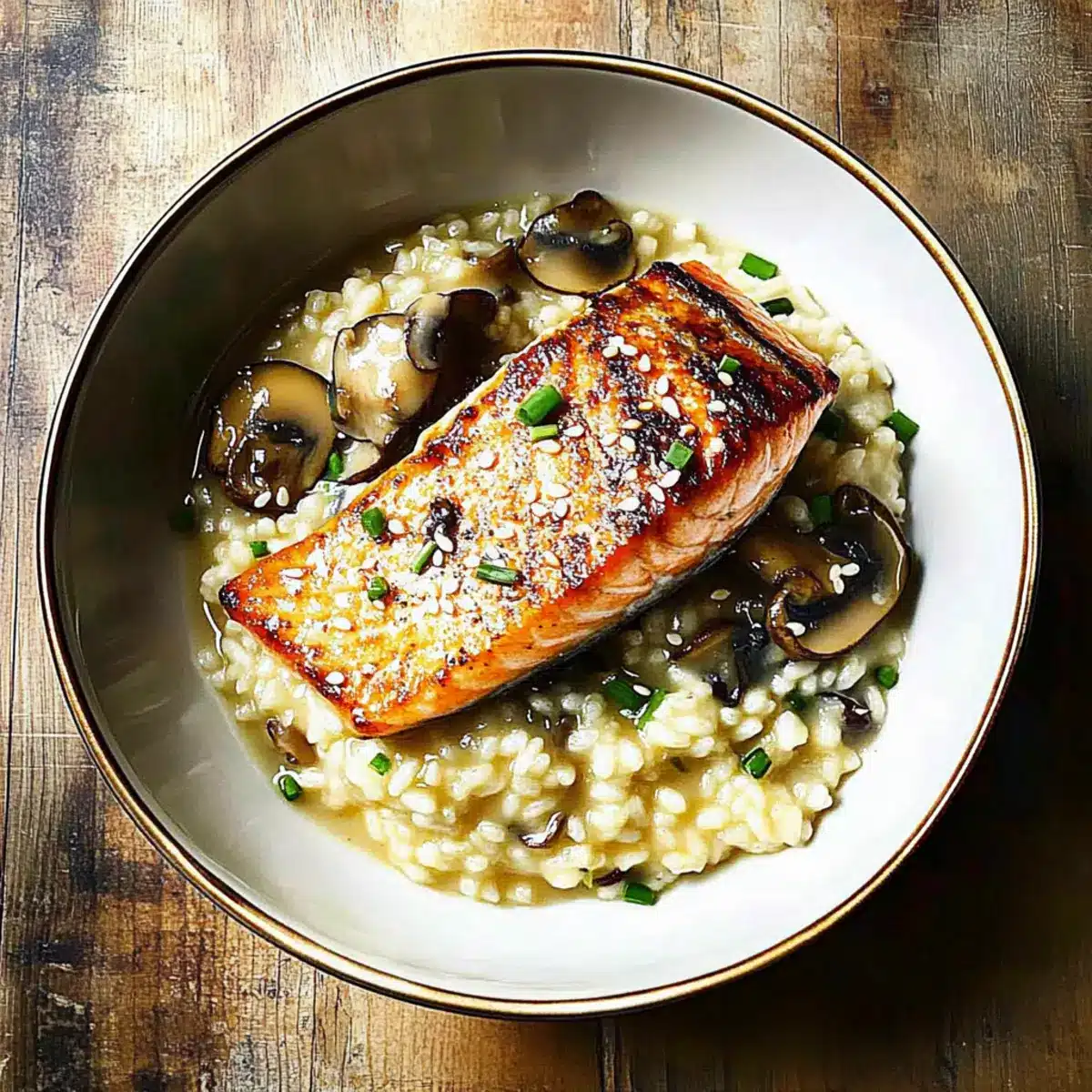
As I stood in my kitchen, the comforting aroma of sizzling garlic and earthy shiitake mushrooms began to fill the air, instantly whisking me away to a cozy Tokyo eatery. Today, I’m excited to share my take on a delightful Japanese Style Risotto with Seared Salmon, a dish that marries creamy texture with umami-rich flavors in a way that’s both quick-to-make and satisfying. Perfect for those busy weeknights when you crave something elegant yet simple, this risotto comes together in just 40 minutes. Plus, it’s a seafood lover’s dream, offering a gourmet twist on traditional comfort food. So, are you ready to dive into this delicious fusion of flavors? Let’s get cooking!
Why is this risotto a must-try?
Quick and Easy: In just 40 minutes, you can whip up this delicious meal that feels luxurious yet remains utterly simple to prepare.
Flavor Explosion: The rich fusion of miso, shiitake mushrooms, and perfectly seared salmon creates a savory delight that resonates with seafood lovers.
Comfort Food with a Twist: This dish reinvent your typical risotto, offering an elegant alternative when you’re bored of fast food or want to impress your guests.
Versatile Ingredients: Use readily available ingredients or substitute with what you have on hand, making it flexible for home cooks.
Perfectly Balanced: An ideal pairing for a light salad or some steamed greens, it rounds out a satisfying dinner without guilt. Don’t forget to pair with options like Japanese Katsu Bowls for a flavorful meal plan!
Japanese Style Risotto Ingredients
For the Risotto Base
• Olive Oil – Adds richness and helps sauté vegetables; substitute with vegetable oil if desired.
• Shiitake Mushrooms – Provide earthy flavor and texture; can be replaced with cremini or button mushrooms.
• Low Sodium Soy Sauce – Enhances umami flavor of the dish; use tamari for gluten-free or coconut aminos as a lower sodium alternative.
• Yellow Onion – Adds sweetness and depth to the risotto; substitute with shallots for a milder flavor.
• Celery Stalk – Contributes crunch and flavor; can omit if unavailable.
• Garlic Clove – Imparts aromatic flavor; adjust amount to taste or use garlic powder as a substitute.
• Sushi Rice or Arborio Rice – Starch-rich rice creating the creamy risotto base; do not substitute with long-grain rice for best results.
• Dry White Wine or Sake – Adds acidity and enhances flavors; omit for a non-alcoholic version or replace with additional broth.
• Hot Chicken Broth – Acts as the cooking liquid for the risotto; use vegetable broth for vegetarian option.
• White Miso Paste – Provides umami flavor and creaminess; substitute with tahini in a pinch, keeping a savory flavor profile.
• Black Pepper – For seasoning; adjust according to preference.
For Garnish
• Chives – Adds fresh flavor and vibrant color; feel free to use green onions as an alternative.
• Sesame Seeds – Offers a nutty crunch; toasted seeds enhance the flavor even more.
This Japanese Style Risotto with Seared Salmon is sure to be a culinary delight that can grace your dining table any day of the week!
Step‑by‑Step Instructions for Japanese Style Risotto with Seared Salmon
Step 1: Marinate the Salmon
In a shallow dish, whisk together soy sauce, white wine, and brown sugar. Place the salmon fillets in the marinade, ensuring they are well-coated, and let them sit for at least 10 minutes. This will infuse the salmon with rich umami flavors while you prepare the risotto.
Step 2: Prepare the Vegetables
While the salmon marinates, tear the shiitake mushrooms into bite-sized pieces, dice the yellow onion and celery, and mince the garlic clove. This prep work will help streamline your cooking process, ensuring everything is ready to go as you create your Japanese Style Risotto with Seared Salmon.
Step 3: Cook the Shiitake Mushrooms
In a large skillet, heat 1 tablespoon of olive oil over medium heat. Once hot, add the torn shiitake mushrooms and sauté them until they release moisture and turn golden brown, about 4 to 5 minutes. Remove the mushrooms from the skillet and set them aside, allowing their rich flavor to enhance your risotto later.
Step 4: Sauté the Aromatics
With the skillet still on medium heat, add another tablespoon of olive oil. Add the diced celery, yellow onion, and minced garlic to the pan, stirring frequently until the onion becomes translucent and fragrant, about 2 minutes. This aromatic mixture sets the stage for your creamy risotto.
Step 5: Toast the Rice
Add the sushi or Arborio rice to the skillet with the sautéed vegetables. Stir and toast the rice for about 1 minute until the grains become slightly translucent. Then, deglaze the pan with your dry white wine or sake, scraping up any browned bits for added flavor. Cook until most of the liquid has evaporated.
Step 6: Gradually Add Chicken Broth
Now, gradually stir in the hot chicken broth, one ladle at a time. Keep stirring frequently, letting the rice absorb the broth as it cooks. Continue this process for about 15 minutes until the rice is nearly al dente and has absorbed most of the liquid, developing a creamy consistency.
Step 7: Incorporate Shiitakes and Miso
Return the cooked shiitake mushrooms to the risotto. In a small bowl, dissolve the white miso paste in a bit of the risotto broth, then stir it into the rice mixture. Let the risotto simmer for an additional 5 minutes to fully meld the flavors and achieve that perfect creamy texture.
Step 8: Cook the Salmon
In a separate nonstick skillet, heat 1 tablespoon of oil and 1 tablespoon of butter over medium-high heat. When hot, carefully place the marinated salmon fillets in the pan. Sear them for about 4 minutes on each side until they develop a beautiful golden crust and are cooked through but still tender inside.
Step 9: Serve with Garnish
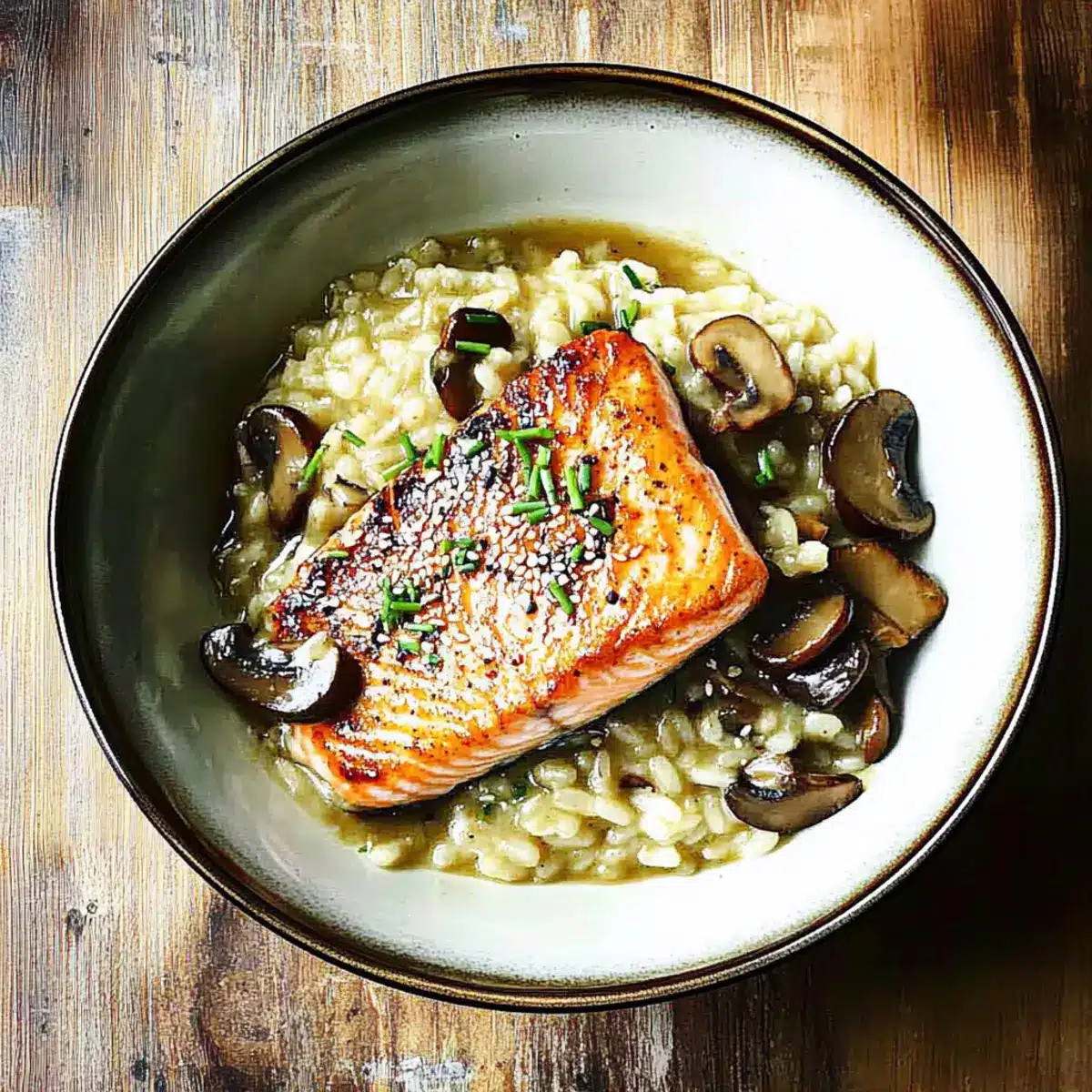
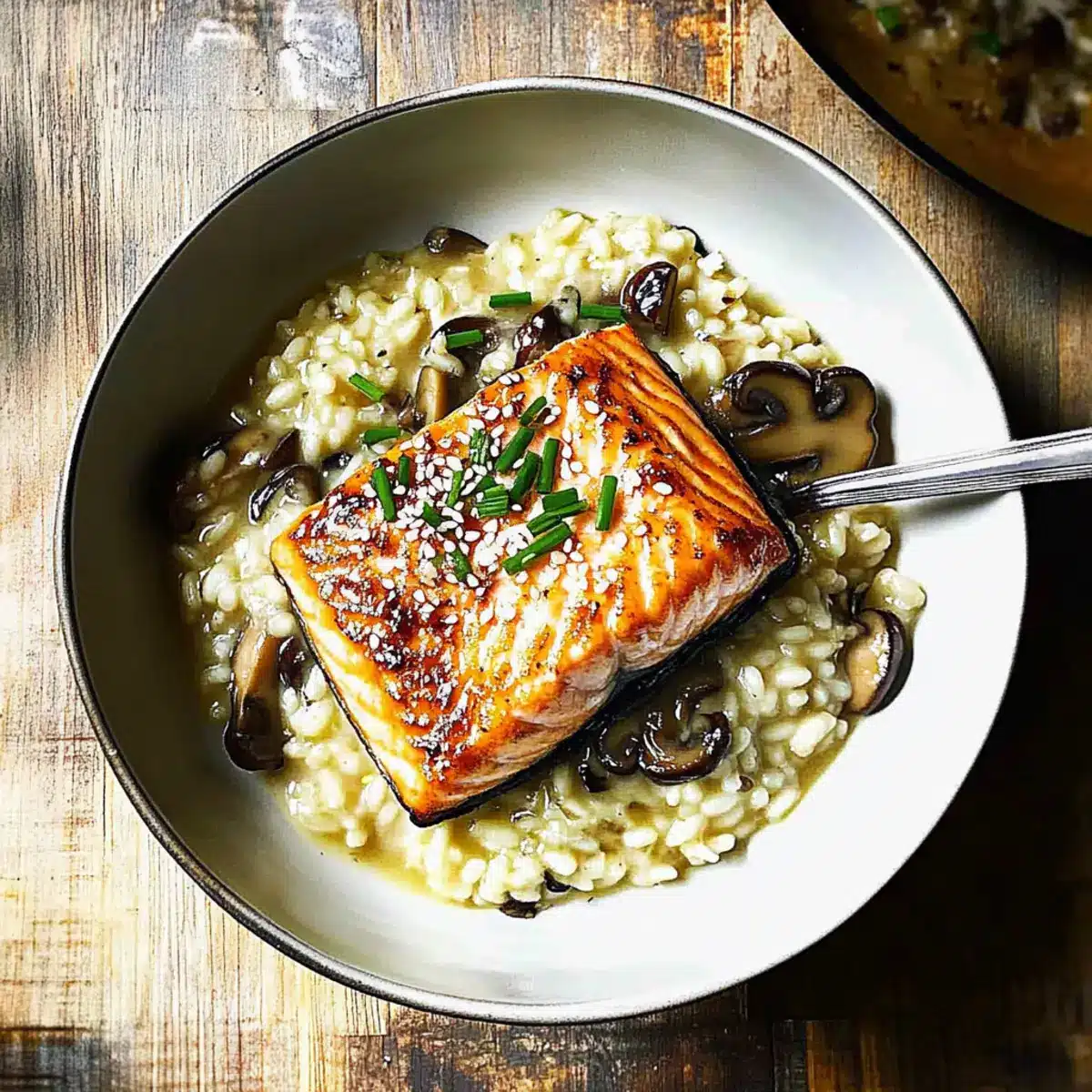
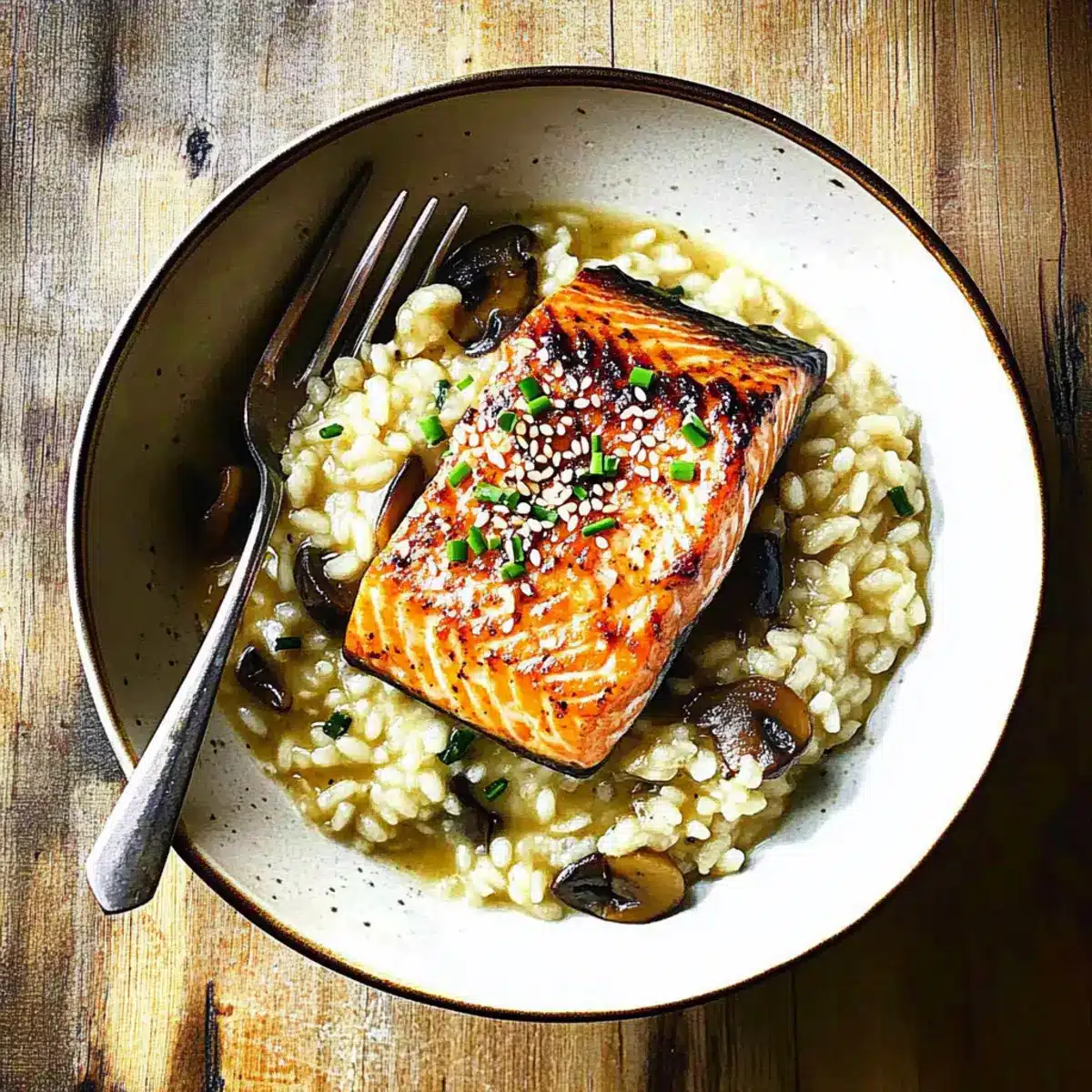
To serve, spoon a generous portion of the Japanese Style Risotto onto each plate and top it with a perfectly seared salmon fillet. Garnish with freshly cracked black pepper, chives, and a sprinkle of sesame seeds for added crunch and flavor. Now, you’re ready to indulge in this delightful meal!
Expert Tips for Japanese Style Risotto with Seared Salmon
-
Hot Skillet: Ensure your skillet is preheated for searing the salmon. A hot pan creates a beautiful crust without burning the fish.
-
Stirring is Key: Keep stirring the risotto constantly while adding broth. This releases the starches and creates that creamy texture we desire in a Japanese Style Risotto with Seared Salmon.
-
Moisture Control: If your risotto appears too thick or dry, add additional broth gradually. Always use hot broth to maintain the cooking temperature and consistency.
-
Miso Magic: For the best flavor, dissolve miso in a bit of warm broth first before incorporating it into the risotto. This prevents lumps and enhances the savory taste.
-
Salmon Substitutes: If salmon isn’t available, consider using seared tuna or grilled shrimp. These alternatives will still provide a delicious protein to your dish.
Japanese Style Risotto Variations & Substitutions
Feel free to get creative with this dish and make it your own, enhancing flavors and textures that tantalize your taste buds!
- Mushroom Swap: Replace shiitake mushrooms with cremini or button mushrooms for a different flavor twist; both options are delicious!
- Spicy Kick: Add a dash of sriracha, red pepper flakes, or a sprinkle of chili oil for a satisfying heat that elevates the dish.
- Seasonal Veggies: Toss in seasonal favorites like peas, bok choy, or spinach to boost nutrition and add vibrant colors alongside the risotto.
- Quinoa Alternative: Swap out the sushi rice with quinoa for a gluten-free option; it creates a unique texture while being super nutritious.
- Seafood Medley: Instead of salmon, try searing shrimp or even tuna for a delightful seafood switch that still brings the umami.
- Herb Infusion: Stir in fresh herbs like basil or cilantro at the end for an aromatic lift that complements the savory notes beautifully.
- Creamy Dreams: For an extra creamy texture, fold in a dollop of cream cheese or a splash of coconut milk when mixing the risotto.
- Broth Varieties: Use miso broth or a homemade seafood broth instead of chicken broth to infuse even more depth into the dish.
These variations will not only allow you to put your unique spin on the recipe but also ensure that it’s flexible for whatever mood strikes you. And if you’re looking for more delicious inspirations, don’t miss out on dishes like Maple Glazed Chicken or Glazed Salmon Pomegranate that are sure to impress!
What to Serve with Japanese Style Risotto with Seared Salmon
Enhance your dining experience with these delightful sides that beautifully complement the rich flavors of this umami-packed dish.
- Light Green Salad: A refreshing mix of greens tossed with a zesty lemon dressing adds brightness and balances the creamy risotto.
- Steamed Broccoli: This vibrant, crunchy veggie not only offers a pop of color but also pairs well with salmon’s rich texture.
- Miso Soup: A warm bowl of savory miso soup echoes the flavors of the risotto and provides a comforting, soothing addition to your meal.
- Cucumber Sunomono: The tangy-sweet taste of this Japanese cucumber salad contrasts the savory risotto while adding a refreshing crunch.
- Sake or White Wine: A chilled glass of sake or a crisp white wine such as Sauvignon Blanc will enhance the dish’s flavors and elevate your dining experience.
- Sesame Green Beans: Sautéed green beans with a sprinkle of sesame seeds offer a nutty crunch that complements the dish perfectly.
- Roasted Sweet Potatoes: The naturally sweet roasted sweet potatoes bring a delightful contrast to the umami flavors of the risotto and salmon.
- Japanese Pickles (Tsukemono): These fermented vegetables introduce a tangy bite that enlivens the palate alongside the creamy richness of the risotto.
Make Ahead Options
These Japanese Style Risotto with Seared Salmon are ideal for busy home cooks! You can prep the risotto base (vegetables, rice, and broth) up to 24 hours in advance; simply refrigerate everything in an airtight container. Keep the marinated salmon separate until you’re ready to cook, as this ensures it remains fresh and flavorful. When you’re ready to serve, just reheat the risotto over low heat, adding a splash of broth to restore creaminess. Sear the salmon just before serving for a golden crust. By prepping ahead, you’ll have a quick, comforting dinner that tastes just as delicious as freshly made!
How to Store and Freeze Japanese Style Risotto with Seared Salmon
Room Temperature: Consume the risotto and salmon within 2 hours of cooking to maintain freshness and food safety.
Fridge: Store leftover risotto and seared salmon separately in airtight containers for up to 2 days. This prevents sogginess and keeps flavors intact.
Freezer: For longer storage, freeze the risotto (without salmon) in a freezer-safe container for up to 3 months. To reheat, gradually warm it on the stovetop with a splash of broth.
Reheating: When ready to enjoy leftovers, reheat the risotto gently on the stovetop, adding a bit of broth to regain creaminess. Sear fresh salmon if desired for a delightful meal.
Japanese Style Risotto with Seared Salmon Recipe FAQs
What type of rice should I use for this risotto?
For the best results, you should use sushi rice or Arborio rice, as these are starch-rich and will create the creamy texture characteristic of a traditional risotto. Avoid using long-grain rice, as it won’t yield the same creamy consistency.
How should I store leftovers of the risotto and salmon?
Store leftover risotto and seared salmon separately in airtight containers in the refrigerator for up to 2 days. This helps maintain the texture and flavor of both components. To reheat, gently warm the risotto on the stovetop with a splash of broth to regain its creaminess, and consider searing fresh salmon for a delightful meal.
Can I freeze Japanese Style Risotto with Seared Salmon?
Absolutely! You can freeze the risotto (without the salmon) in a freezer-safe container for up to 3 months. To reheat, allow it to thaw overnight in the refrigerator. When ready to enjoy, warm it gradually on the stovetop with a bit of broth until creamy. For the salmon, it’s best to cook it fresh when serving.
What if my risotto turns out too dry during cooking?
If your risotto appears too thick or dry, simply add additional hot chicken broth gradually, a ladleful at a time. Stir frequently to ensure the rice absorbs the broth evenly, which will help create that creamy texture we all love!
Are there any dietary considerations for this recipe?
For those with gluten sensitivities, opt for tamari instead of low sodium soy sauce, and you can use coconut aminos as a lower-sodium alternative. If you’re simply not a fan of seafood, this dish can easily be made with grilled chicken or even sautéed vegetables for a vegetarian delight, while still maintaining its savory essence.
Savor Japanese Style Risotto with Seared Salmon Tonight
Ingredients
Equipment
Method
- In a shallow dish, whisk together soy sauce, white wine, and brown sugar. Place the salmon fillets in the marinade, ensuring they are well-coated, and let them sit for at least 10 minutes.
- While the salmon marinates, tear the shiitake mushrooms into bite-sized pieces, dice the yellow onion and celery, and mince the garlic clove.
- In a large skillet, heat 1 tablespoon of olive oil over medium heat. Add the torn shiitake mushrooms and sauté until they turn golden brown, about 4 to 5 minutes. Remove and set aside.
- Add another tablespoon of olive oil to the skillet. Add diced celery, yellow onion, and minced garlic, stirring until the onion becomes translucent, about 2 minutes.
- Add the sushi or Arborio rice to the skillet, stir and toast the rice for about 1 minute. Deglaze the pan with white wine or sake, and cook until most of the liquid has evaporated.
- Gradually stir in the hot chicken broth, one ladle at a time, stirring frequently for about 15 minutes until the rice is nearly al dente.
- Return the cooked shiitake mushrooms to the risotto. Dissolve the white miso paste in a bit of the risotto broth, then stir it into the rice mixture.
- In a separate nonstick skillet, heat 1 tablespoon of oil and 1 tablespoon of butter over medium-high heat. Sear the marinated salmon fillets for about 4 minutes on each side.
- To serve, spoon the risotto onto plates, top with the seared salmon, and garnish with black pepper, chives, and sesame seeds.
Leave a Reply