
“Have you ever found yourself staring into the fridge, feeling uninspired by the same old weeknight meals? Let me share a little secret—a tangy twist awaits you with this creamy Peanut Butter Chicken Curry. This dish fuses the best of Indian and Thai cuisines, offering a delightful explosion of flavors in under 30 minutes! Perfect for those busy days when you crave a comforting meal without the fuss, this recipe is not just quick; it’s also gluten-free, making it accessible for everyone at the table. Whether you’re cooking for yourself or whipping up a cozy dinner for friends, this hearty curry will surely become your new go-to. Ready to transform your dinner routine with a splash of creativity?”
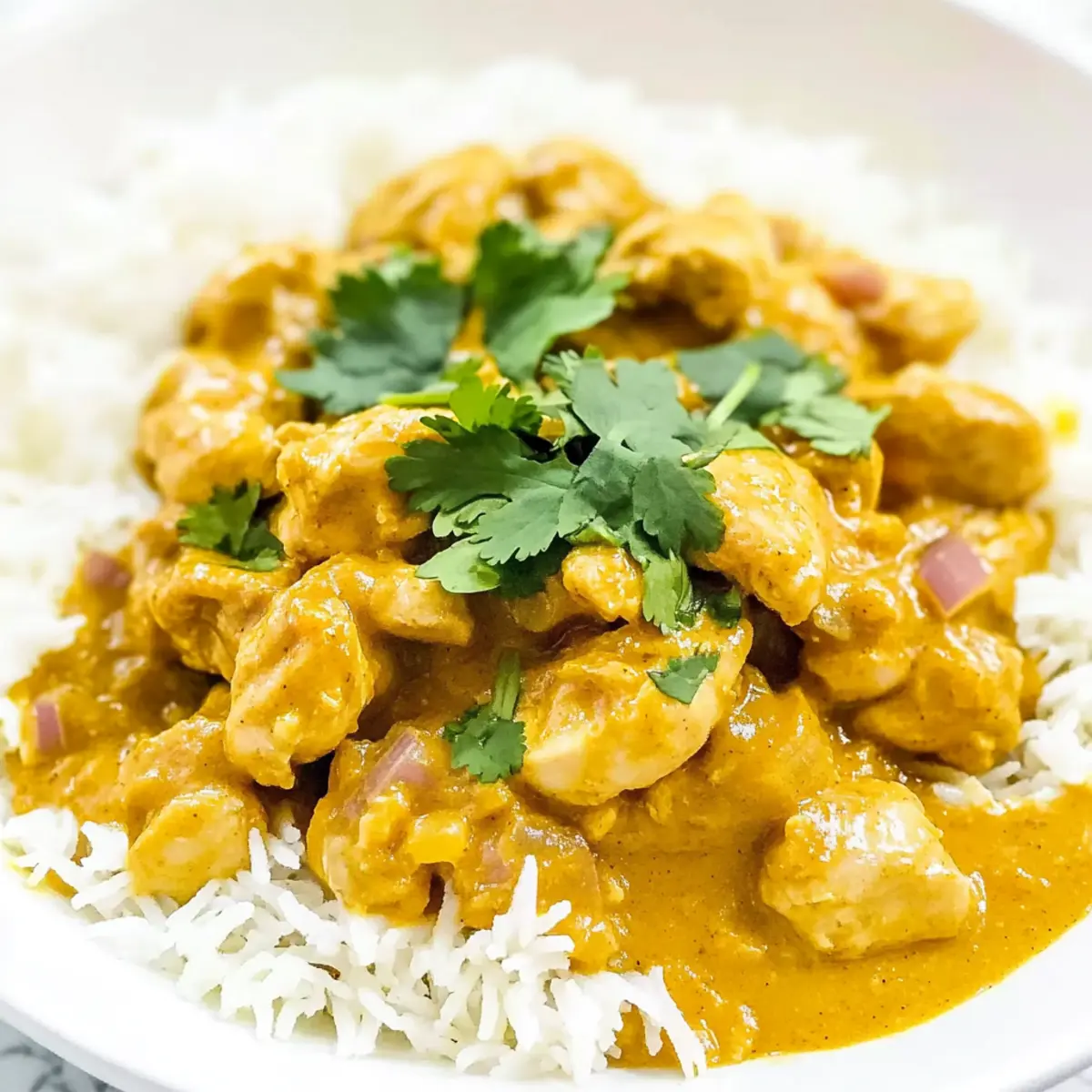
Why is This Chicken Curry a Must-Try?
Quick and Delicious: In under 30 minutes, you can enjoy a gourmet meal that tastes like it took hours to prepare!
Creamy Comfort: The velvety sauce made with peanut butter and coconut milk gives a rich, satisfying experience that beats any takeout.
Flavor Fusion: This recipe beautifully brings together Indian and Thai flavors, creating a unique dish that appeals to diverse palates.
Customizable: Looking for a different twist? Add your favorite veggies or swap in tofu for a fantastic alternative.
Crowd-Pleasing: Perfect for family dinners or entertaining guests, this Peanut Butter Chicken Curry will have everyone coming back for seconds!
For an exciting dinner idea, check out my Thai Chicken Wrap with Crunchy Asian Slaw too!
Peanut Butter Chicken Curry Ingredients
For the Chicken
• Boneless Skinless Chicken Thighs – Provides protein and richness; you can use chicken breast as a leaner alternative.
• Salt – Enhances flavor; sea salt or kosher salt can be used for best results.
• Black Pepper – Adds heat and depth; freshly cracked offers better flavor.
For the Sauce
• Coconut Oil – Used for sautéing; gives a subtle coconut flavor, or substitute with vegetable oil if necessary.
• Onion (Large, diced) – Builds flavor base and sweetness; shallots can also be a milder option.
• Garlic (3 cloves, minced) – Adds aroma and taste; garlic powder may be used in a pinch (1 teaspoon).
• Ginger (1 tablespoon, grated) – Provides warmth and spice; ground ginger can substitute, but fresh is preferred for optimal flavor.
• Dried Coriander (½ teaspoon) – Offers a citrusy note; ground cumin can be a substitute for a different flavor profile.
• Turmeric Powder (¾ teaspoon) – Imparts a warm color and earthy flavor; paprika may substitute for a milder option.
• Ground Red Pepper (¼ teaspoon) – Adds spice; adjust to taste or omit for a milder version.
• Coconut Milk (14 oz. can) – Forms the base of the sauce; reduced-fat coconut milk can be used for a lighter version.
• Natural Peanut Butter (¼ cup) – Provides creaminess and nutty flavor; almond or cashew butter are good substitutes.
• Honey (1½ tablespoons) – Adds sweetness; maple syrup or agave syrup are great alternatives.
• Fish Sauce (½ tablespoon) – Enhances umami flavor; additional soy sauce can substitute for a vegan option.
• Soy Sauce (2 tablespoons or liquid aminos) – Provides saltiness and depth; tamari can be used for a gluten-free version.
For Serving
• Hot Steamed Rice (4 cups) – Serves as a pairing to the curry; quinoa or cauliflower rice can be substituted for lower carb options.
• Diced Cilantro (optional for garnish) – Adds freshness and color; can be omitted if not preferred.
Let the adventure of flavors begin! Enjoy preparing this delightful Peanut Butter Chicken Curry and feel free to customize it as your heart desires!
Step‑by‑Step Instructions for Peanut Butter Chicken Curry
Step 1: Season the Chicken
In a mixing bowl, season your chopped boneless skinless chicken thighs generously with salt and freshly cracked black pepper. This simple step amplifies the dish’s flavor. Ensure every piece is well-coated, as this will create a deliciously seasoned base for your Peanut Butter Chicken Curry.
Step 2: Sauté the Chicken
Heat 1 teaspoon of coconut oil in a Dutch oven or large sauté pan over medium heat. Once shimmering, add the seasoned chicken thighs and sauté for about 8-10 minutes, until they are golden brown and cooked through. You’ll know they’re ready when they reach an internal temperature of 165°F and the juices run clear. Remove the chicken and set aside.
Step 3: Sauté the Onions
In the same pan, add the remaining coconut oil, allowing it to heat for a moment. Toss in the diced onions and sauté for 3-4 minutes, stirring occasionally, until they become soft and translucent. This builds a foundational flavor for your creamy Peanut Butter Chicken Curry, so keep an eye on them to avoid burning.
Step 4: Add Aromatics and Spices
Once the onions are perfectly sautéed, mix in minced garlic, grated ginger, dried coriander, turmeric powder, and ground red pepper. Stir continuously for 1-2 minutes until fragrant. The aroma of these spices will tantalize your senses, setting the stage for the curry’s wonderful depth of flavor.
Step 5: Create the Sauce
Pour in the coconut milk, followed by the natural peanut butter, honey, fish sauce, and soy sauce. Stir well to combine all ingredients. Bring the mixture to a gentle simmer over medium heat, allowing the sauce to meld together. Reduce the heat and let it thicken for about 4-5 minutes, stirring occasionally until it reaches your desired consistency.
Step 6: Combine Chicken with Sauce
Return the sautéed chicken to the sauce, making sure to coat each piece well. Allow the chicken to simmer in the rich sauce for an additional 2-3 minutes, ensuring it’s heated through and infused with all those delicious flavors. This step ensures the chicken is perfectly enveloped in the creamy Peanut Butter Chicken Curry.
Step 7: Serve and Garnish
Remove the curry from heat and serve hot over a bed of fluffy steamed rice. For an appealing presentation, garnish with freshly diced cilantro, adding a pop of color and freshness to your dish. Enjoy every comforting bite of your homemade Peanut Butter Chicken Curry, sure to wow anyone at the table!
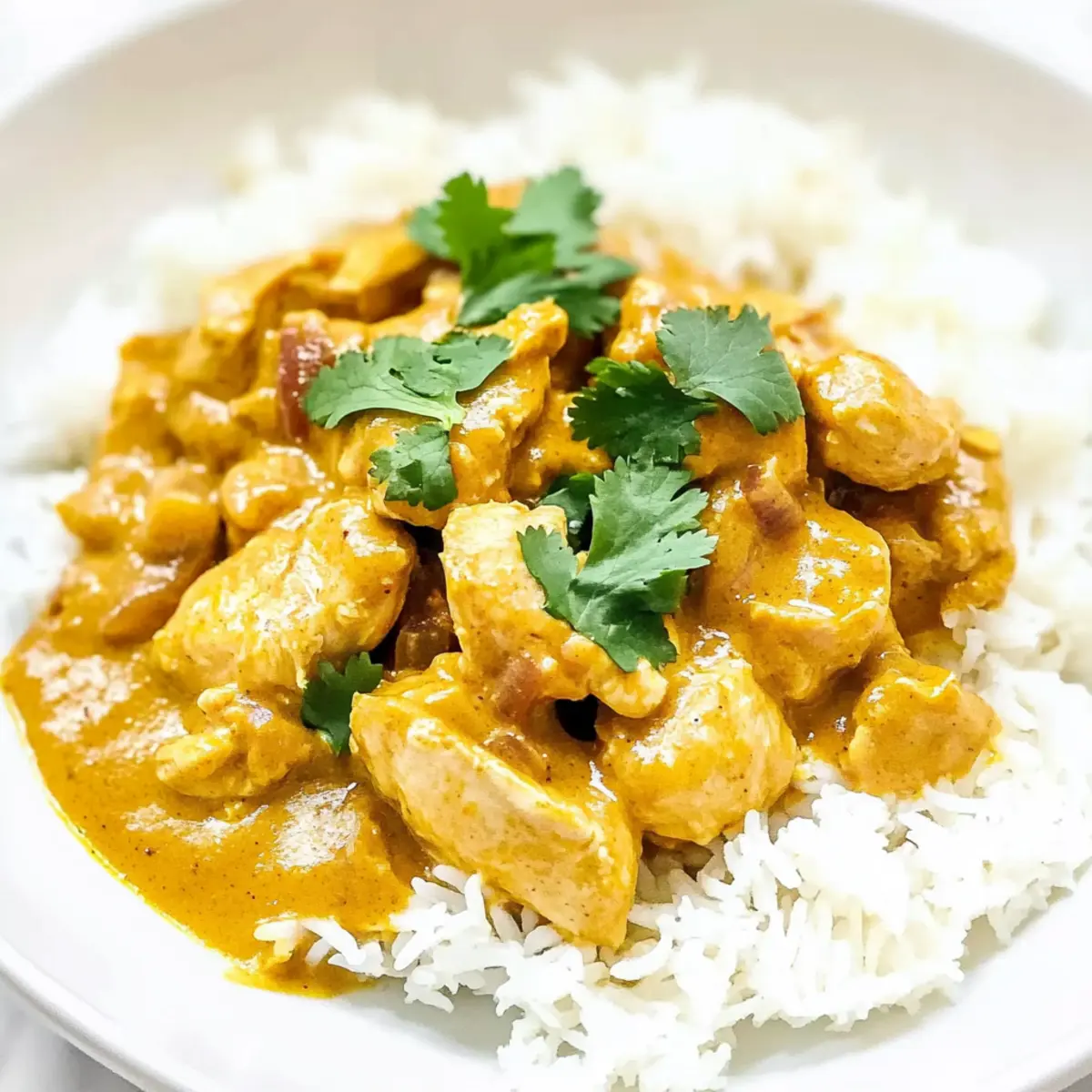
How to Store and Freeze Peanut Butter Chicken Curry
Fridge: Store leftovers in an airtight container for up to 4-5 days. This allows the flavors to meld and enhances the taste with each day.
Freezer: For long-term storage, freeze in a suitable container or freezer bag for up to 2 months. Ensure it’s well-sealed to prevent freezer burn.
Reheating: To reheat, thaw overnight in the fridge, then warm in a saucepan over medium-low heat with a splash of water or coconut milk for a creamy texture.
Cooling: Allow the Peanut Butter Chicken Curry to cool completely before storing to prevent condensation and maintain its delicious flavor.
Peanut Butter Chicken Curry Variations
Feel free to mix things up and make this Peanut Butter Chicken Curry your own with these exciting variations. Your kitchen adventure awaits!
- Nut-Free: Substitute peanut butter with sunbutter or tahini for a deliciously creamy sauce without nuts. Perfect for those with nut allergies!
- Coconut-Free: Use cream or milk for the sauce base instead of coconut milk to cater to personal preferences. This creates a different, yet delightful creaminess.
- Veggie-Loaded: Add bell peppers, snap peas, or carrots for a boost of nutrition and color. These veggies not only enhance flavor but provide a satisfying crunch.
- Spicy Kick: Increase the ground red pepper or add some sliced fresh chili for an extra level of heat that spice lovers will adore. Adjust to your taste!
- Plant-Based Delight: Swap chicken for chickpeas or cubed tofu to create a hearty vegetarian version that doesn’t skimp on flavor. It’s filling and satisfying!
- Asian Twist: Incorporate Asian sauces like hoisin or sriracha for an unexpected flavor twist. This adds a delicious fusion element to your dish.
- Herb Infusion: Swap cilantro for fresh basil or mint as a garnish to add a refreshing twist. These herbs will elevate the dish with new and vibrant flavors.
If you’re intrigued by other flavors, consider exploring my Garlic Butter Chicken Bites or the comforting Chicken Enchiladas Comfort for more kitchen inspiration!
Expert Tips for Perfect Peanut Butter Chicken Curry
-
Pre-measure Ingredients: Gather and measure all your ingredients before starting. This keeps things organized and ensures the quick cooking process goes smoothly.
-
Use Fresh Spices: Opt for fresh ginger and spices like turmeric and coriander for the best flavor in your Peanut Butter Chicken Curry. Ground versions can lack the rich depth.
-
Adjust for Spice: Taste the sauce while cooking and adjust the ground red pepper according to your heat preference. If you’re unsure, start with less and add more as needed.
-
De-glaze the Pan: After cooking the chicken, de-glaze the pan with a bit of water or coconut milk to lift the flavorful bits stuck on the bottom, enhancing the sauce.
-
Substitution Flexibility: Don’t hesitate to swap ingredients! Chicken can be substituted with tofu or chickpeas for a plant-based option, making this dish versatile for different diets.
-
Storage for Later: If you have leftovers, cool and store them in an airtight container. This Peanut Butter Chicken Curry remains delicious for up to 4-5 days in the fridge.
What to Serve with Creamy Peanut Butter Chicken Curry
Elevate your meal experience with delightful sides and accompaniments that complement the rich flavors of this luxurious curry.
-
Hot Steamed Rice: A must-have for balancing the creamy sauce; it absorbs the flavors beautifully, creating every bite a satisfying adventure.
-
Naan Bread: Soft, pillowy naan is perfect for scooping up curry, adding a delightful chewy contrast that enhances the meal’s texture.
-
Crispy Vegetables: Roasted or sautéed veggies like broccoli and bell peppers add crunch and freshness, perfectly offsetting the curry’s richness.
-
Quinoa: This nutritious alternative to rice provides a nutty flavor and a protein boost, making your meal even heartier and more wholesome.
-
Cucumber Raita: A cooling yogurt sauce with cucumber and herbs complements the spice in the curry while offering a refreshing contrast.
-
Mango Chutney: Adding a touch of sweetness, this condiment brightens the dish and enhances each bite of the chicken curry with fruity notes.
-
Cilantro Lime Salad: A refreshing salad with zesty lime dressing offers a crisp contrast, balancing the curry’s creaminess with bright flavors.
-
Chilled Coconut Water: This drink pairs wonderfully, providing hydration and a subtle tropical twist that echoes the curry’s coconut notes.
-
Chocolate Coconut Macaroons: End your meal on a sweet note with these chewy, chocolatey treats that harmonize with the tropical essence of coconut milk.
Make Ahead Options
These Peanut Butter Chicken Curry preparations are perfect for busy home cooks looking to save time during the week! You can season and sauté the chicken up to 24 hours in advance; simply store it in an airtight container in the refrigerator. Additionally, the sauce can be made ahead and refrigerated for up to 3 days; just combine the coconut milk, peanut butter, honey, and spices, then refrigerate in a separate container. To finish, when you’re ready to enjoy your curry, just reheat the chicken and sauce over medium heat, combining them for a few minutes until warmed through. This way, your Peanut Butter Chicken Curry remains just as delicious and comforting, with minimal effort on hectic weeknights!
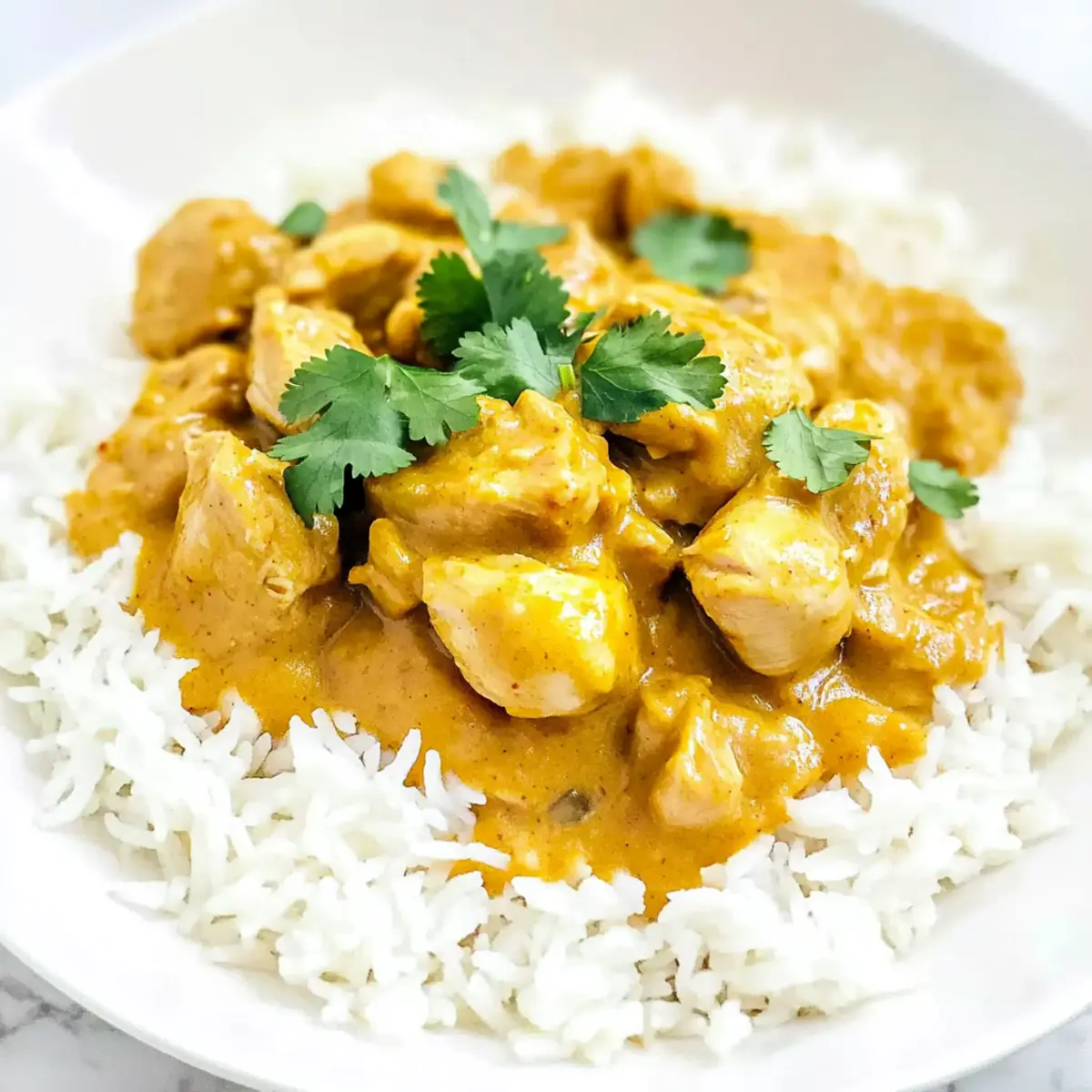
Peanut Butter Chicken Curry Recipe FAQs
What type of chicken should I use for this recipe?
I recommend using boneless skinless chicken thighs for a juicy and rich texture. However, you can also use chicken breasts if you’re looking for a leaner option. Just remember that breasts may cook a bit faster, so keep an eye on them!
How should I store leftovers of the Peanut Butter Chicken Curry?
Leftovers can be stored in an airtight container in the refrigerator for up to 4-5 days. This allows the flavors to deepen and meld together, enhancing the taste each day. Just be sure to let it cool completely before sealing!
Can I freeze Peanut Butter Chicken Curry?
Absolutely! To freeze, allow the curry to cool completely, then transfer it into freezer-safe containers or bags. It can be frozen for up to 2 months. To reheat, thaw it in the fridge overnight and warm it on the stovetop with a small splash of water or coconut milk to restore its creamy texture.
What if I’m allergic to peanuts?
If you have a peanut allergy, you can easily substitute the peanut butter with almond or cashew butter for a similar texture and flavor. Just make sure to check that the alternative you choose is a safe option for your dietary needs.
How can I adjust the spice level of the curry?
To control the spice level, start with less ground red pepper and taste as you cook. You can always add more if you want additional heat. Alternatively, if the curry becomes too spicy, adding a bit more coconut milk can help to mellow the flavors.
What should I serve with the Peanut Butter Chicken Curry?
I love serving this delightful curry over a bed of hot steamed rice, but it’s equally delicious with quinoa or cauliflower rice for a low-carb option. Garnish with fresh cilantro and crushed peanuts for an extra touch of flavor and texture!
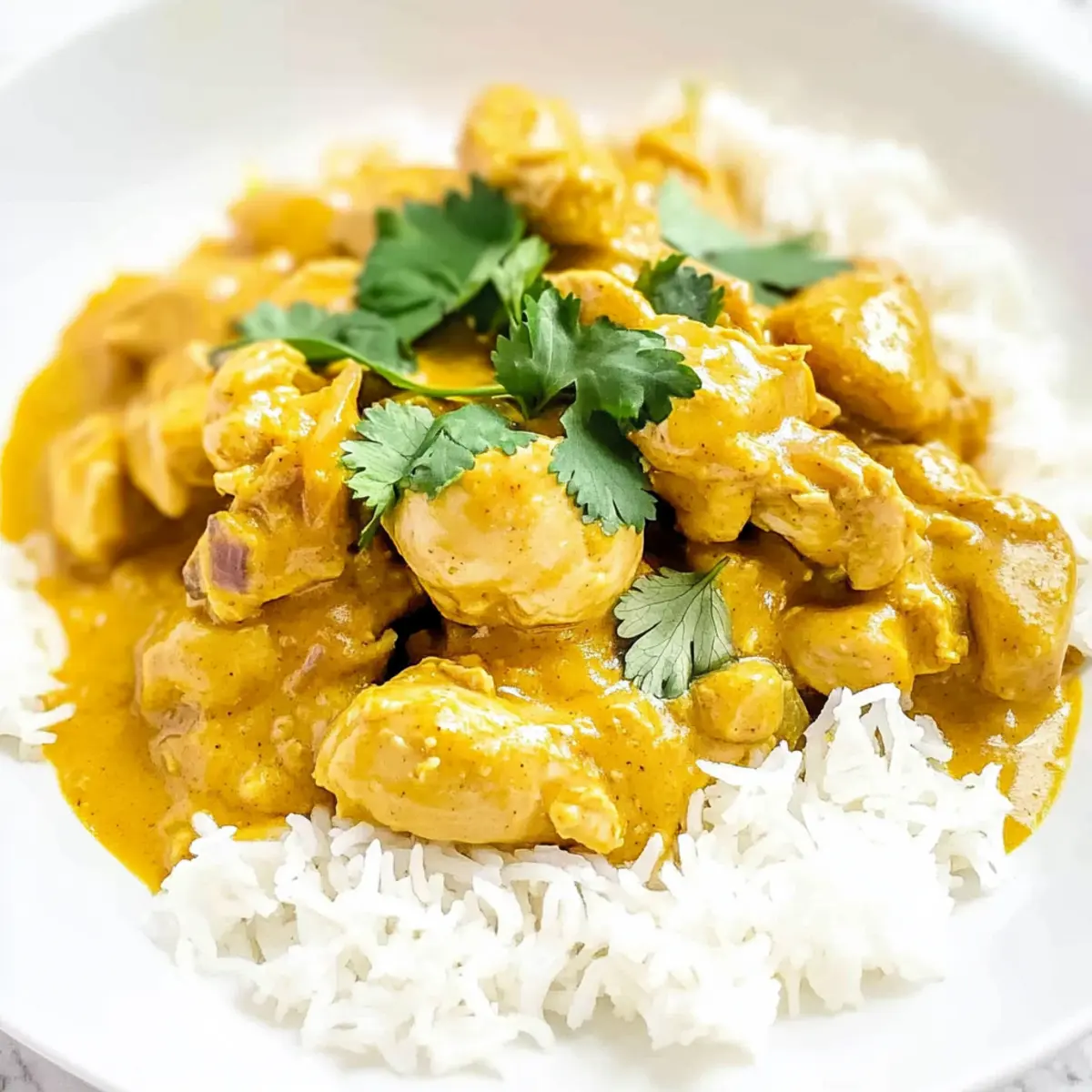
Creamy Peanut Butter Chicken Curry That Will Wow Your Taste Buds
Ingredients
Equipment
Method
- In a mixing bowl, season your chopped boneless skinless chicken thighs generously with salt and freshly cracked black pepper.
- Heat 1 teaspoon of coconut oil in a Dutch oven or large sauté pan over medium heat. Once shimmering, add the seasoned chicken thighs and sauté for about 8-10 minutes, until they are golden brown and cooked through.
- In the same pan, add the remaining coconut oil. Add the diced onions and sauté for 3-4 minutes until soft and translucent.
- Mix in minced garlic, grated ginger, dried coriander, turmeric powder, and ground red pepper. Stir continuously for 1-2 minutes until fragrant.
- Pour in the coconut milk, natural peanut butter, honey, fish sauce, and soy sauce. Stir well to combine and bring to a gentle simmer.
- Return the sautéed chicken to the sauce, making sure to coat each piece well. Allow it to simmer for an additional 2-3 minutes.
- Remove the curry from heat and serve hot over steamed rice. Garnish with freshly diced cilantro.
Leave a Reply